

Industrial Fan Price in Bangladesh — Exhaust Fans and Axial Blowers
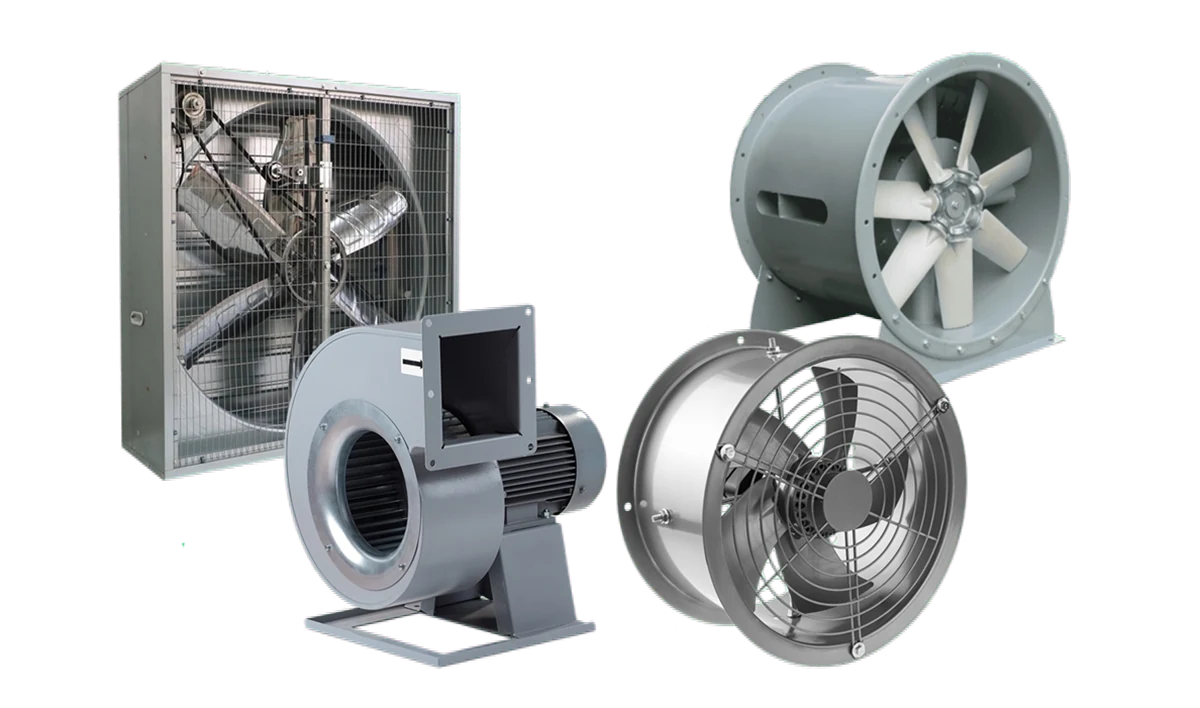
An industrial fan is priced on six things: size, fan type, motor rating, drive arrangement, blade and casing material, and how much installation is in the scope. MHM Machineries BD Ltd supplies exhaust fans from 18 to 54 inch, MAB axial blowers from 4,000 to 100,000 m³/h, centrifugal fans, FRP roof extractors and turbine ventilators — with installation and service from Mirpur, Dhaka.
- Wall exhaust fans 18–54 inch, 8,500–44,500 m³/h
- MAB axial blowers 12–54 inch, up to 100,000 m³/h
- Motors 0.25–18 kW, 380 V three phase
- Quotation states the duty point and installation as separate lines
Updated 18 September 2026 · MHM Machineries BD Ltd, Mirpur, Dhaka
At a glance
- Products supplied
- Box-type wall exhaust fan, MAB tube axial blower, centrifugal fan, FRP roof-mounted exhaust fan, natural ventilation turbine
- Size range
- 18 to 54 inch wall fans; MAB-12 to MAB-54 blowers
- Max air flow
- 8,500 to 44,500 m³/h per wall fan (5,000–26,200 CFM); 4,000 to 100,000 m³/h per blower — the sheet’s free-air figures
- Motor and supply
- 0.25 to 18 kW, 380 V three phase
- How price is set
- Per project against the duty point; ask for equipment, accessories and installation as separate lines
- Coverage
- Dhaka and the industrial belts of Gazipur, Narayanganj, Savar, Ashulia, Tongi and Chattogram
What actually sets the price of an industrial fan
Two quotations for “a 42-inch fan” can differ by more than a factor of two and both be honest, because they are not the same machine or the same scope. These are the ten lines that move the number.
Swipe the table sideways to see every column.
| Cost driver | Why it changes the price | Effect on cost |
|---|---|---|
| Size (the casing size, not the blade) | Casing steel, blade mass and motor rating all scale together. Note the designation is the casing: a 54-inch box fan carries a 50-inch blade, an 18-inch carries 16 inch. | The largest single driver — an 18-inch and a 54-inch unit are different classes of machine |
| Fan type | A propeller wall fan, a tube axial blower and a centrifugal fan are different machines with different casings and impellers. | Centrifugal is normally dearest per m³/h, wall propeller the cheapest |
| Motor rating and make | kW rating, efficiency class, IP rating and brand. | Frequently a third or more of the equipment cost on the smaller sizes |
| Drive arrangement | Direct drive is simpler; belt drive adds pulleys, belts, bearings and a shaft assembly. | Belt drive costs more, and lets the air flow be trimmed after commissioning |
| Blade and casing material | Galvanised steel, aluminium, stainless steel or FRP. | FRP and stainless carry a clear premium, and are the right answer in dye houses and ETP areas |
| Speed control | Fixed speed, two-speed motor, or a variable frequency drive. | A drive adds cost up front and usually repays it in electricity |
| Accessories | Gravity or motorised shutters, bird screen, weather hood, mounting frame, vibration isolators. | Small items one by one, significant across a multi-fan order |
| Installation scope | Wall opening or roof kerb, frame fabrication, cabling, starter panel, commissioning. | Quoted as a separate line — always ask for it separately |
| Quantity | A nine-fan dye-house order and a single replacement are not priced the same way. | Ask for a quantity break on anything above a few units |
| Lead time | Ex-stock against indent import, plus the exchange rate and duty on the day of the order. | Import-linked items move with the market |
Price itself is quoted per project. MHM states the duty point, the motor rating and the installation scope on the quotation, so a low number cannot hide a missing starter panel or a thinner casing.
What is normally not inside the equipment price
- Wall opening, roof kerb and any civil or structural work
- Mounting frame fabrication where a standard frame does not suit the wall
- Cabling from the distribution board, starter or variable frequency drive panel, and earthing
- Scaffolding, crane or lifting arrangement for roof-level work
- Inlet louvers for make-up air — the most commonly forgotten line
- VAT and delivery to site unless the quotation says otherwise
Ask every supplier to itemise those separately. A cheaper quotation that leaves out the starter panel and the inlet louvers is not cheaper.
The six lines every fan quotation should carry
- Model, size and fan type
- Air flow at the duty point, not free air
- Motor kW, brand, IP rating and speed
- Drive: direct or belt, and spare belts
- Blade and casing material
- Installation, starter and commissioning as a separate line
Ask for all six in writing — from us and from anyone else you are comparing. If a quotation is missing any of them, the two cannot be compared.
MHM industrial fan range
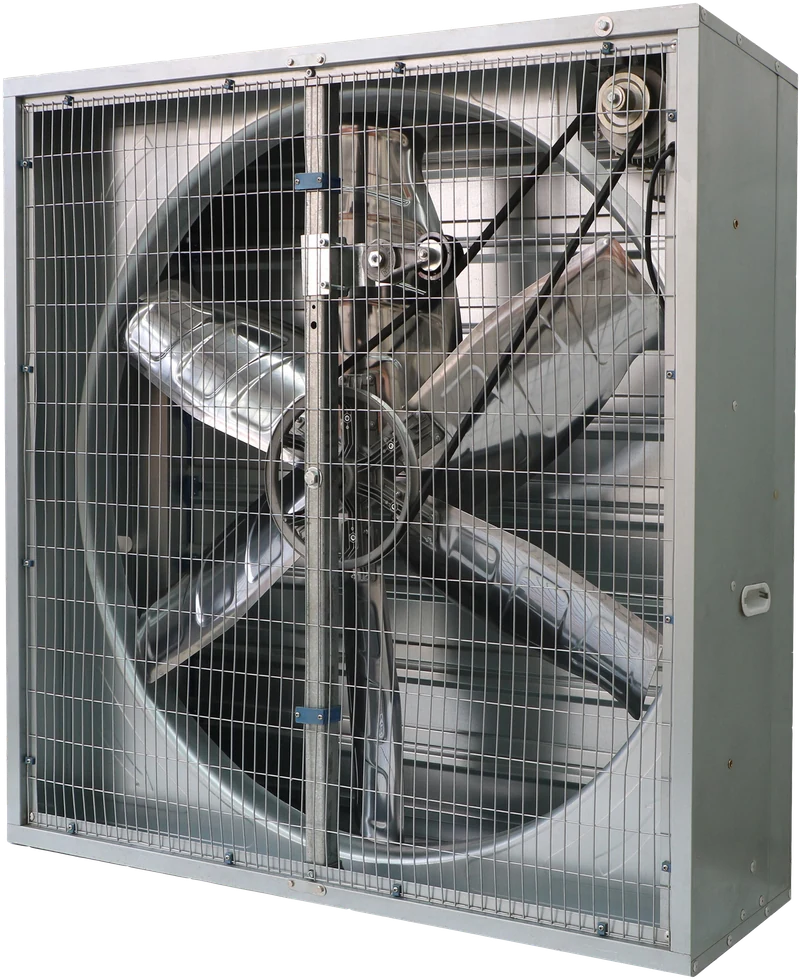
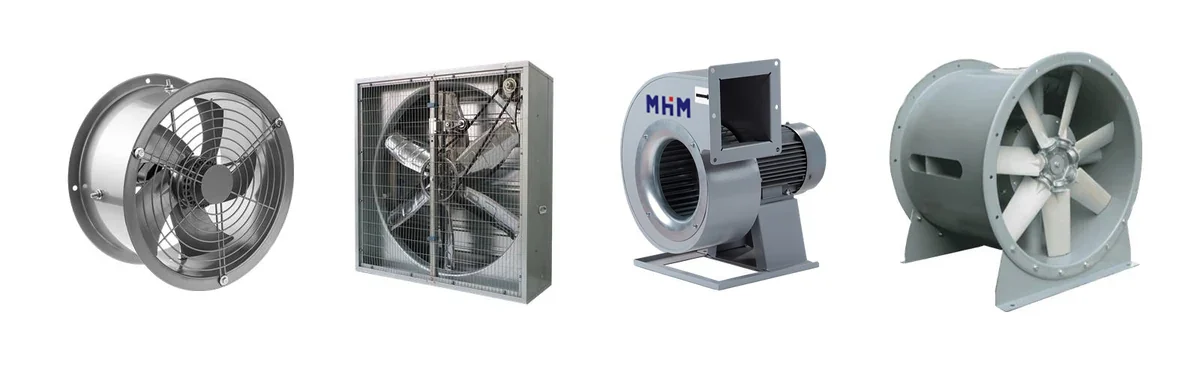
Industrial exhaust fan (box type)
Wall-mounted box fans from 18 to 54 inch, 8,500–44,500 m³/h, 0.37–1.5 kW on 380 V three phase. The workhorse of dye houses, weaving sheds and poultry and dairy buildings.
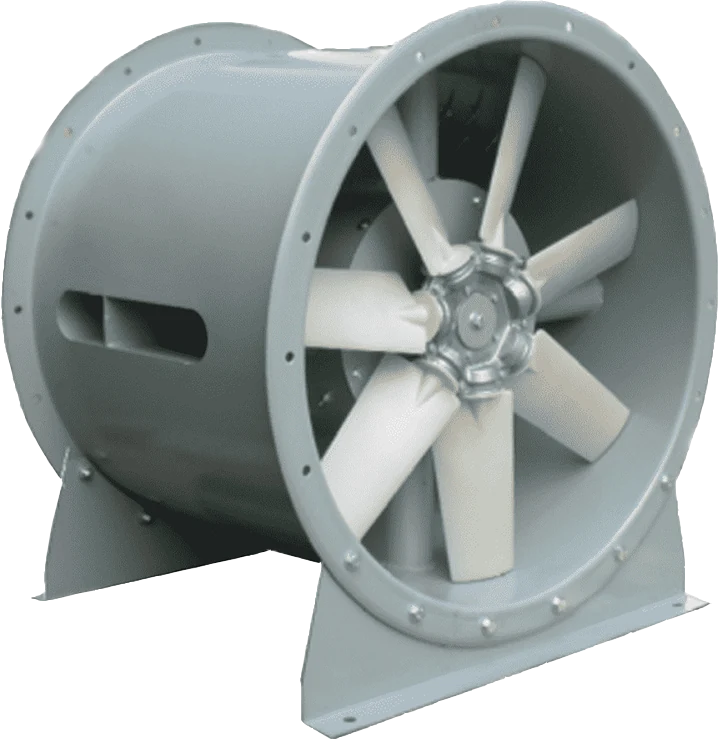
Industrial axial blower (MAB series)
Tube axial blowers from MAB-12 to MAB-54 with two-speed motors at 1,440 and 940 rpm, 4,000–100,000 m³/h. Used where the air has to be pushed through a duct run or a spot-cooling nozzle.
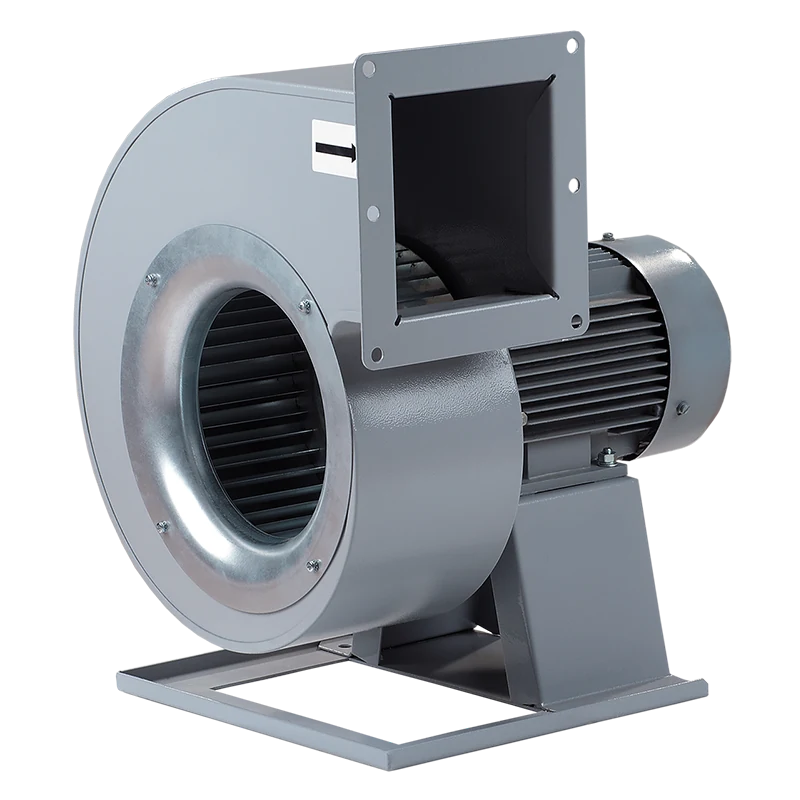
Industrial centrifugal fan and blower
Scroll-housing fans for high static pressure, dust and fibre-laden air, hot gas and boiler draught duty. Selected against a duty point (air flow plus static pressure), never against diameter alone.
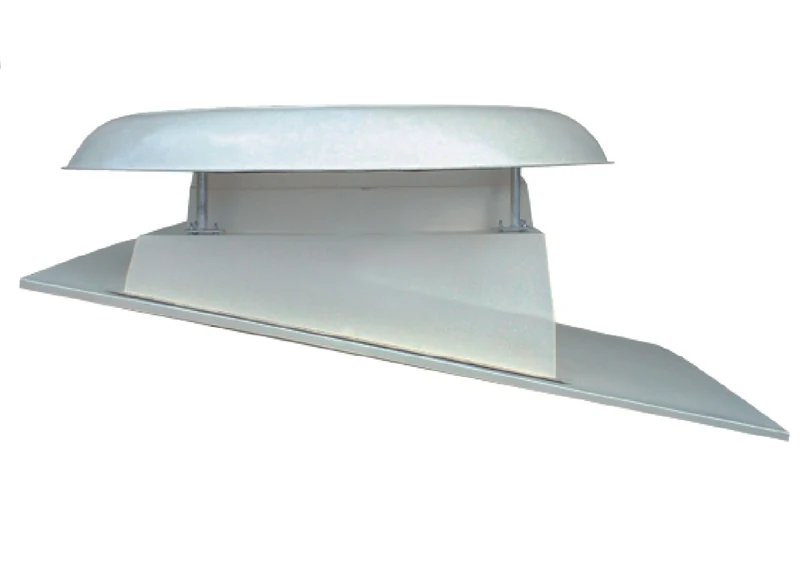
FRP roof-mounted exhaust fan
Roof extractors in FRP for corrosive air — dye houses, ETP buildings, chemical stores — where a galvanised casing would not last. Supplied with the base frame and flashing arrangement.
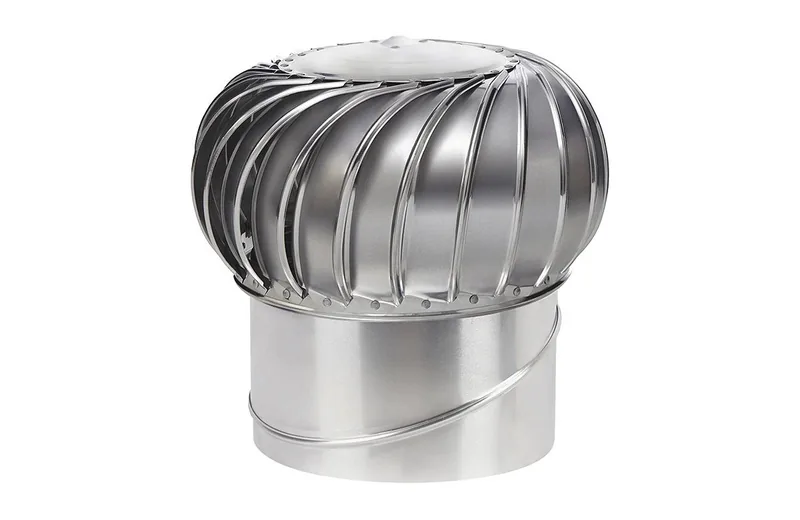
Natural ventilation turbine
Wind-driven roof turbines that run on stack effect and wind with no motor and no electricity. They shift far less air than a powered fan, so they support a ventilation scheme rather than replace one.
MHM industrial exhaust fan specifications
Wall-mounted box-type fans, 380 V three phase, from MHM’s own published data sheet. CFM is converted at 0.5886 CFM per m³/h.
Swipe the table sideways to see every column.
| Size | Dimensions L×W×D (mm) | Blade length (inch) | Speed (rpm) | Max air flow (m³/h) | Max air flow (CFM) | Noise (dB) | Motor (kW) | Voltage (V) |
|---|---|---|---|---|---|---|---|---|
| 54 inch | 1380 × 1380 × 400 | 50 | 440 | 44,500 | 26,200 | 65 | 1.5 / 1.1 | 380 |
| 48 inch | 1220 × 1220 × 400 | 44 | 510 | 37,500 | 22,100 | 65 | 1.5 / 1.1 | 380 |
| 42 inch | 1067 × 1067 × 400 | 40 | 570 | 32,500 | 19,100 | 65 | 0.75 | 380 |
| 36 inch | 900 × 900 × 400 | 32 | 800 | 21,500 | 12,700 | 65 | 0.75 | 380 |
| 32 inch | 812 × 812 × 400 | 30 | 1,050 | 14,800 | 8,700 | 65 | 0.75 | 380 |
| 24 inch | 600 × 600 × 400 | 20 | 1,150 | 10,000 | 5,900 | 65 | 0.37 / 0.55 | 380 |
| 18 inch | 460 × 460 × 400 | 16 | 1,200 | 8,500 | 5,000 | 65 | 0.37 | 380 |
Source: MHM Machineries BD Limited, Specification of Industrial Fan (PDF). Where two motor ratings are shown, both are offered for that size. The sheet prints 65 dB for every size and states neither the measurement distance nor A-weighting, so treat the noise column as indicative and ask for a measured figure if a boundary limit applies. Air flow is the sheet’s maximum (free-air) figure, not the duty point. Specifications are subject to change according to requirement, brand and availability — confirm the model on your quotation.
MHM industrial axial blower specifications (MAB series)
Tube axial blowers with two-speed motors at 1,440 rpm and 940 rpm, 380 V three phase.
Swipe the table sideways to see every column.
| Model | Diameter (inch) | Max air flow at 1,440 rpm (m³/h) | Max air flow at 940 rpm (m³/h) | Max air flow at 1,440 rpm (CFM) | Motor options (kW) | Noise (dB) |
|---|---|---|---|---|---|---|
| MAB-12 | 12 | 4,000 | 3,000 | 2,350 | 0.75 / 0.25 | 80 / 65 |
| MAB-16 | 16 | 8,000 | 6,000 | 4,700 | 1.1 / confirm | 80 / 65 |
| MAB-18 | 18 | 12,000 | 9,000 | 7,100 | 1.1 / 0.75 | 80 / 65 |
| MAB-22 | 22 | 10,000 | 8,000 | 5,900 | 1.5 / 0.75 | 80 / 65 |
| MAB-24 | 24 | 15,000 | 12,000 | 8,800 | 1.5 / 0.75 | 85 / 70 |
| MAB-28 | 28 | 20,000 | 16,000 | 11,800 | 4 / 2.2 / 1.5 | 85 / 70 |
| MAB-32 | 32 | 25,000 | 22,000 | 14,700 | 5.5 / 4 | 85 / 70 |
| MAB-36 | 36 | 35,000 | 30,000 | 20,600 | 5.5 / 4 | 85 / 70 |
| MAB-40 | 40 | 45,000 | 40,000 | 26,500 | 11 / 7.5 / 5.5 | 85 / 70 |
| MAB-42 | 42 | 55,000 | 48,000 | 32,400 | 11 / 7.5 / 5.5 | 85 / 70 |
| MAB-44 | 44 | 60,000 | 52,000 | 35,300 | 11 / 7.5 | 85 / 70 |
| MAB-48 | 48 | 80,000 | 65,000 | 47,100 | 18 / 15 / 11 | 90 / 75 |
| MAB-54 | 54 | 100,000 | confirm | 58,900 | 18 / 15 | 90 / 75 |
Source: MHM Machineries BD Limited, Specification of Industrial Fan — Axial Blower (PDF). The sheet prints the motor ratings as one unsplit cell (for example “4/2.2/1.5”), without saying which rating belongs to which speed, so they are reproduced here as one column. Two cells are printed as figures that cannot be right — MAB-16’s low-speed motor as 0.05 kW and MAB-54’s low-speed air flow as 8,000 m³/h — and are shown as “confirm” instead of reproduced. Note also that the sheet prints a higher air flow for MAB-18 than for MAB-22; confirm the duty point of those two sizes on your quotation before ordering.
Work out the size before you ask for a price
Fan pricing only means something once the duty is known. This is the short method every engineer in a Bangladeshi factory can run on a phone.
- Measure the volume, not the floor. Length × width × average height in metres. A 60 m × 30 m shed with a 6 m eaves height is 10,800 m³.
- Pick the air changes per hour the process needs. As working bands: dye houses and finishing floors 30–60 air changes per hour, weaving sheds 20–30, garment sewing floors 6–10 (higher if the floor is roofed in steel and unshaded), warehouses and stores 4–6. Treat these as rules of thumb and check them against your own process heat and headcount.
- Multiply. Air flow required in m³/h = volume × air changes per hour. 10,800 m³ at 30 air changes = 324,000 m³/h.
- Divide by one fan and round up. 324,000 ÷ 37,500 m³/h free air for a 48-inch wall fan = 8.6, so nine fans is the minimum — add one for shutter, screen and hood losses.
- Provide the make-up air. Exhaust fans only move the air they can draw in. Inlet louvers or open side panels of roughly the same free area as the fans are part of the design, not an accessory — this is the single most common reason a correctly sized fan under-performs on site.
Worked example — a dye house
A dye house 60 m × 30 m with a 6 m eaves height is 10,800 m³. At 30 air changes per hour it needs 324,000 m³/h. One 48-inch wall fan moves 37,500 m³/h free air, so 324,000 ÷ 37,500 = 8.6 → nine 48-inch fans as the minimum, with inlet louvers of a similar free area on the opposite elevation. Nine is a free-air count: shutters, bird screen and weather hood all take flow off it, and a tight louver area takes more, so the installed count is usually nine plus one.
For ducted systems, hot gas, dust-laden air or anything where static pressure matters, a centrifugal fan is selected against a duty point instead — send the duct layout and MHM will work it out with you. Chilled-water air handling is a different job again: see industrial HVAC systems and industrial HVAC price in Bangladesh.
Where these fans go to work

Garment and sewing floors
Pedestal fans move air over the operators but do not remove heat from the building. Wall exhaust fans on one elevation with inlet louvers on the other pull the heat out and drop the working temperature across the floor.
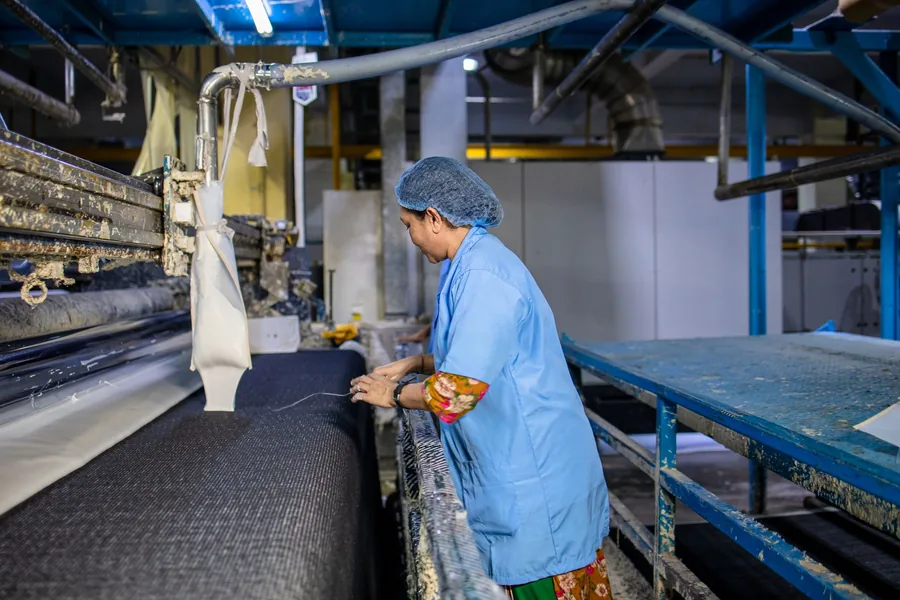
Dyeing, finishing and weaving
Steam, lint and humidity in the same room. This is where 30–60 air changes per hour, FRP or stainless casings and generous make-up air openings are specified instead of a standard galvanised fan.
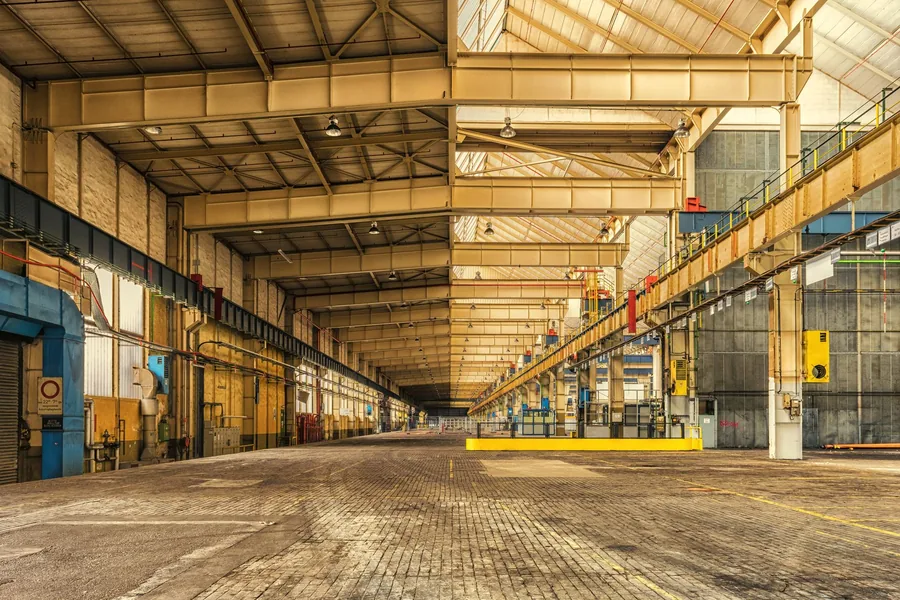
Warehouses and stores
Four to six air changes per hour is usually enough to stop heat and moisture building up under a steel roof. Roof extractors and turbine ventilators do much of this work without a duct system.
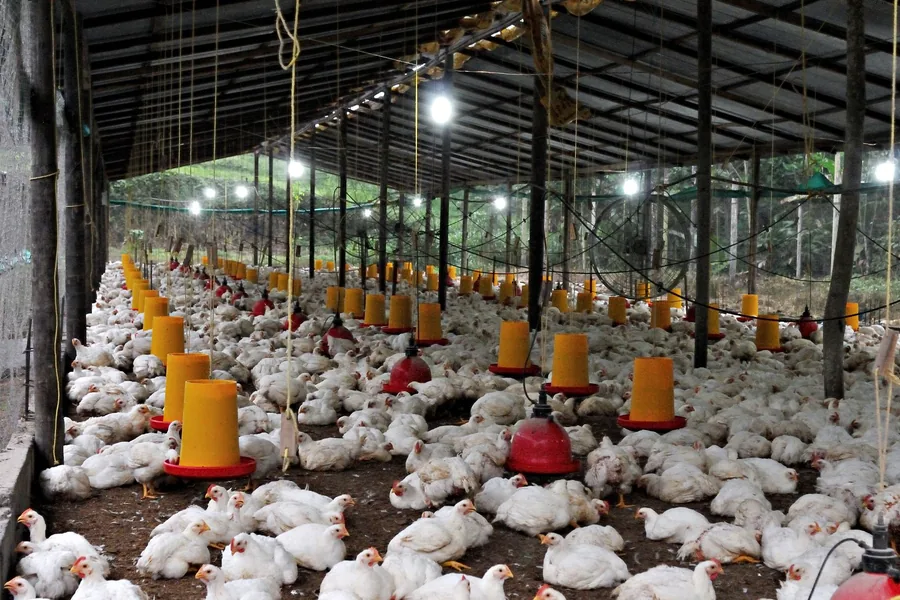
Poultry and dairy sheds
Box-type exhaust fans with shutters are the standard fit for controlling heat, humidity and ammonia in poultry and dairy buildings, normally sized on air changes and stocking density together.
Running cost, not just purchase price
Over a fan’s life the electricity bill is usually larger than the purchase price, and that is where the fan law earns its keep.
Take motor rating × running hours as the base figure. A 0.75 kW 42-inch fan running twelve hours a day gives about 9 units (kWh) a day — roughly 234 units in a 26-day month, and about 2,100 units a month for nine of them. One caveat that flatters every fan quotation: a nameplate kW is the motor’s shaft rating, and the meter reads the electrical input, which is higher by the motor’s inefficiency — commonly 20 to 25 percent at full load on motors this size. Multiply by your own industrial tariff for the taka figure.
Fan shaft power varies with the cube of speed. Running at 80 percent speed on a variable frequency drive drops power to 0.8³ = about 51 percent. On a bank of fans that runs two shifts, that saving alone often pays for the drives. A two-speed motor is the cheaper, coarser version of the same idea — and it does not track the cube law: on MHM’s own MAB sheet the low-speed rating runs anywhere from a third to about three quarters of the high-speed rating, depending on the model. That is why the MAB blowers come with 1,440 / 940 rpm motors.
| Motor (kW) | Units per 12-hour day | Units per 26-day month |
|---|---|---|
| 0.37 | 4.4 | 115 |
| 0.75 | 9.0 | 234 |
| 1.1 | 13.2 | 343 |
| 1.5 | 18.0 | 468 |
| 5.5 | 66.0 | 1,716 |
| 11 | 132 | 3,432 |
One unit = one kWh. These are motor rating (shaft) × hours. Metered input is typically 20–25 percent higher at full load because of motor inefficiency, and lower at part load or on a drive.
Buying checklist
Nine questions that separate a comparable quotation from a cheap one.
- Is the air flow quoted at the duty point, or is it a free-air figure?
- Is the motor kW, brand, IP rating and insulation class stated?
- Direct drive or belt drive — and if belt, are spare belts included?
- What are the blade and casing materials, and are they right for that atmosphere?
- Are shutters, bird screen, weather hood and mounting frame included or extra?
- Is installation a separate line, and does it include the starter and cabling?
- What does the warranty cover on the motor as against the fan assembly, and is site labour included?
- Are spares and service available locally, and how quickly?
- Have inlet louvers for make-up air been priced at all?
Industrial fan supplier in Bangladesh
What a supplier is expected to cover, and what to ask for before you compare two quotations.
MHM Machineries BD Limited is an industrial fan supplier working from 846, East Shewrapara, Mirpur, Dhaka-1216, and has supplied industrial cooling and ventilation equipment since 2019. The range covered here is the box-type wall exhaust fan from 18 to 54 inch, the MAB tube axial blower from MAB-12 to MAB-54, centrifugal fans, FRP roof-mounted extractors and natural ventilation turbines. Factories in Dhaka and in the industrial belts of Gazipur, Narayanganj, Savar, Ashulia, Tongi and Chattogram are within the normal service area.
As an industrial exhaust fan supplier the scope is not only the machine. It starts with sizing the duty before the order is placed, and continues through accessories, installation, commissioning and maintenance — including on fans MHM did not originally supply.
- Sizing first — room volume and air changes per hour worked out before a model is named
- Equipment from a published sheet — the exhaust fan and MAB blower data sheets are public PDFs, so the air flow, motor rating and dimensions you are quoted can be checked against a document
- Accessories priced as their own lines — shutters, bird screen, weather hood, mounting frame, and the inlet louvers that make-up air needs
- Installation and commissioning by MHM’s own service team, quoted separately from the equipment
- Maintenance and repair on fans, motors and drives afterwards
- One written quotation covering the fan, the accessories and the installation, so two suppliers can actually be compared
Ask any industrial fan supplier in Bangladesh for the air flow at your duty point rather than the free-air figure, and for the data sheet the number comes from. A quotation that cannot show both is not comparable with one that can.
Why buyers choose MHM Machineries
MHM Machineries BD Limited has supplied industrial cooling and ventilation equipment from Mirpur, Dhaka since 2019. The fan range is supplied and installed alongside the chillers, cooling towers and HVAC systems on the same plant, which is why the ventilation scheme and the cooling load get looked at together.
- Five fan types from one supplier — wall exhaust, axial blower, centrifugal, FRP roof extractor and turbine ventilator
- Published specifications: MHM’s own data sheets for the exhaust fan and MAB blower ranges are public PDFs
- Sizing help before you buy, from air changes per hour to duty point
- Installation, assembly and commissioning by MHM’s own service team
- Maintenance and repair on fans, motors and drives, including units MHM did not supply
- Industrial customer base since 2019 in textile, steel and general manufacturing
- Written quotation with equipment and installation as separate lines
সংক্ষেপে — বাংলায়
Industrial exhaust fan-এর দাম মূলত ছয়টি বিষয়ে নির্ভর করে — size, fan type, motor rating, drive (direct না belt), blade ও casing material, এবং installation scope কতটুকু ধরা আছে। একই ৪২ ইঞ্চি fan-এর দাম material ও drive ভেদে দ্বিগুণেরও বেশি হতে পারে, তাই quotation-এ এই ছয়টি লাইন আলাদা করে লেখা থাকা দরকার।
দাম জিজ্ঞাসা করার আগে নিজে হিসাব করে নিন: shed-এর আয়তন (দৈর্ঘ্য × প্রস্থ × উচ্চতা) × প্রয়োজনীয় air change per hour = প্রতি ঘণ্টায় কত m³ বাতাস সরাতে হবে। ১০,৮০০ m³ dye house-এ ৩০ ACH মানে ৩,২৪,০০০ m³/h — অর্থাৎ ৪৮ ইঞ্চির ৯টি fan।
মনে রাখতে হবে, exhaust fan কেবল ততটুকু বাতাসই বের করতে পারে যতটুকু ভেতরে ঢুকতে পারে। তাই বিপরীত দিকে সমপরিমাণ inlet louver বা খোলা জায়গা রাখা design-এরই অংশ — এটা বাদ পড়লেই fan ঠিকমতো কাজ করে না।
MHM Machineries BD Ltd ১৮ থেকে ৫৪ ইঞ্চি exhaust fan, MAB axial blower, centrifugal fan, FRP roof exhaust fan ও turbine ventilator সরবরাহ, installation ও service করে। লিখিত quotation-এ model, duty point এবং installation আলাদা লাইনে দেওয়া হয়। ফোন +880 1767-004433।
Frequently asked questions
What is the price of an industrial exhaust fan in Bangladesh?
There is no single price, because size, drive type, motor rating, casing material and the installation scope all move it. An 18-inch wall fan and a 54-inch belt-driven unit are different classes of equipment. MHM quotes per project: send the shed dimensions and the process, and the quotation comes back with the model, the air flow at the duty point, the motor rating and installation as a separate line.
What size industrial exhaust fan do I need for my factory?
Work from room volume, not floor area. Multiply volume in cubic metres by the air changes per hour the process needs, then divide by the air flow of one fan. A 10,800 m³ dye house at 30 air changes per hour needs 324,000 m³/h, which is nine 48-inch fans at 37,500 m³/h each. Always provide inlet louvers of a similar free area, or the fans cannot deliver their rating.
What is the air flow of a 48 inch industrial exhaust fan?
MHM’s 48-inch wall-mounted exhaust fan is rated 37,500 m³/h — about 22,100 CFM — at 510 rpm, with a 1.5 kW or 1.1 kW motor on 380 V three phase, and overall dimensions of 1220 × 1220 × 400 mm. The 54-inch size moves 44,500 m³/h (26,200 CFM) and the 18-inch size 8,500 m³/h (5,000 CFM).
Which is cheaper, an axial blower or a centrifugal fan?
An axial blower is normally cheaper for the same air flow, because it is a simpler machine with a smaller casing. A centrifugal fan costs more and is the correct choice when static pressure is high, the air carries dust or fibre, or the gas is hot. Choosing on price against the wrong duty wastes the whole purchase.
Does the fan price include installation in Bangladesh?
No — equipment and installation are quoted as separate lines. Installation covers the wall opening or roof kerb, the mounting frame, weather hood, cabling from the nearest distribution board, starter or drive panel and commissioning. Ask for both lines in writing so tenders can be compared like for like.
How much electricity does an industrial exhaust fan use?
Motor rating × running hours. A 0.75 kW 42-inch fan running twelve hours a day uses about 9 units (kWh) a day and roughly 234 units in a 26-day month. Because fan power varies with the cube of speed, running at 80 percent speed on a variable frequency drive cuts consumption to about half.
Which fan should a poultry or dairy shed use?
Box-type wall exhaust fans with shutters are the standard fit, sized on air changes per hour together with stocking density, and paired with inlet openings along the opposite wall. The same 18 to 54 inch range listed on this page is used, usually in the larger sizes with two-speed or drive-controlled motors so air flow can be cut back in cool weather.
How do I choose an industrial fan supplier in Bangladesh?
Compare scope, not headline price. Ask each industrial exhaust fan supplier for the air flow at your duty point and the data sheet it comes from, the motor kW, brand, IP rating and insulation class, whether shutters, bird screen, weather hood and mounting frame are included or extra, whether installation and the starter and cabling are separate lines, and what the warranty covers on the motor as against the fan assembly. Two quotations only mean something once they cover the same scope.
Who supplies and installs industrial exhaust fans in Bangladesh?
MHM Machineries BD Limited supplies, installs and services industrial exhaust fans, MAB axial blowers, centrifugal fans, FRP roof extractors and natural ventilation turbines, from its office at 846, East Shewrapara, Mirpur, Dhaka-1216, Bangladesh. Call +880 1767-004433 or e-mail sales@mhmmachineries.com for a written quotation.
Related pages on this site
Get a written quotation
Send the duty and the site, and MHM Machineries BD Ltd replies with a model, the capacity, and equipment and installation priced as separate lines — so two quotations can actually be compared.
- Model and capacity stated against your duty, not a generic list price
- Equipment, accessories and installation as separate lines
- Delivery and lead time confirmed in writing
- Spares and service available from Mirpur, Dhaka
- MHM Machineries BD Limited
846, East Shewrapara, Mirpur, Dhaka-1216, Bangladesh
Open in Google Maps - +880 1767-004433 · +880 1300-806868
WhatsApp +880 1767-004433 - sales@mhmmachineries.com
Tell us the duty
Fill this in and send it straight to our sales desk on WhatsApp or by e-mail. Nothing is stored on this page.